
Use of different vegetation species
To prevent beavers from foraging on trees and shrubs, only non-edible tree species could be included in the area close to shore.
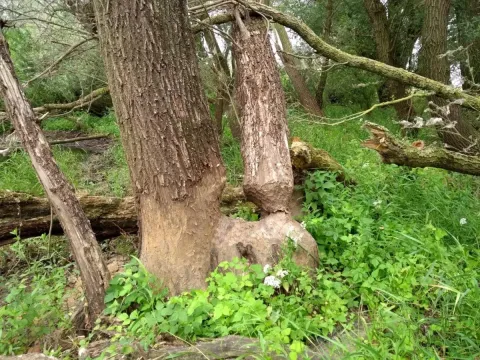
© V. Dijkstra
Page content
The beavers’ diet depends strongly on shrubs and trees. They mostly forage up to 20 to 30 metres away from the riverbank. In the picture above gnawing is visible on a white willow (Salix alba).
As a solution to beavers foraging and gnawing on trees and shrubs, only non-edible tree species could be maintained in the area close to the shore. If no edible species are present, this could prevent beavers from settling in the area. However, some beavers go further on land or dig foraging channels to reach their food. Therefore this method does not always guarantee success, yet it proves effective in many cases.
List of trees and shrubs that are applicable in the 20-30 metre zone close to shore:
- Black alder (Alnus glutinosa)
- Sycamore maple (Acer pseudoplatanus)
- Norway maple (Acer platanoides)
- Field maple (Acer campestre)
- Horse chestnut (Aesculus)
- Sweet chestnut (Castanea sativa)
- Conifers (Coniferae)
- Elder (Sambucus nigra)
- Blackthorn (Prunus spinosa)
- Hawthorn (Crataegus)
- Guelder rose (Viburnum opulus)
- Rose (Rosaceae)
- Dogwood (Cornus)
- European spindle (Euonymus europaeus)
Beavers forage on black alder (Alnus glutinosa) occasionally, yet not in large quantities due to its toxic properties.
Aquatic plants and agricultural crops
The presence of aquatic plants such as waterlilies or agricultural crops like corn, carrot, or beets, can facilitate beaver communities to settle in the area, even when few trees or shrubs are present. Additionally, beaver territories can be extensive, ranging from 1 to 10 km of shoreline. Therefore, beavers may roam in less suitable areas if they have suitable settlement sites nearby. This means that when designing a conflict-free development plan for the area, the surrounding landscape should also be taken into consideration.
Providing other foraging locations
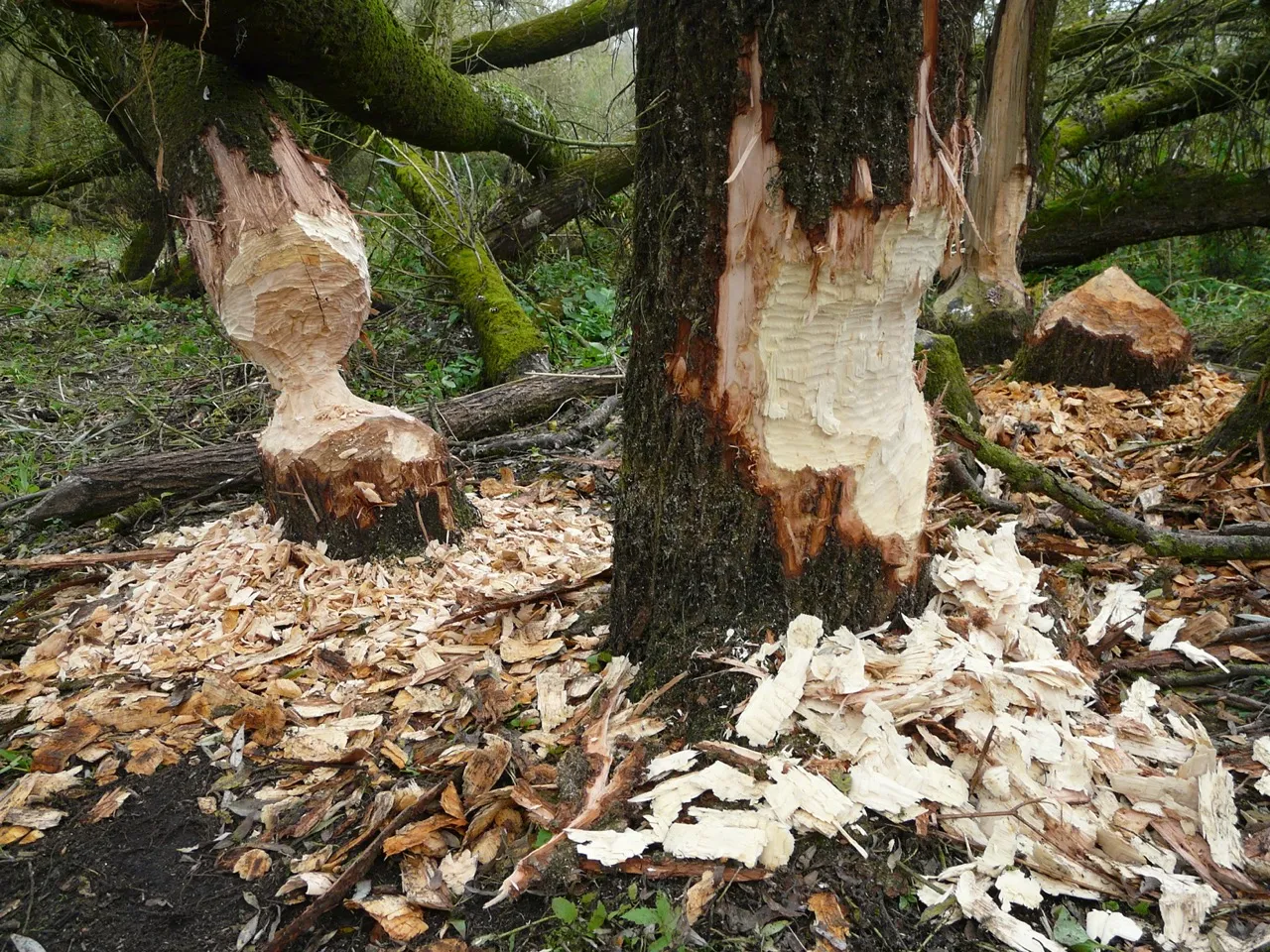
To prevent beavers from foraging and gnawing on trees and shrubs in a certain area, placing attractive tree species - such as willow (Salix) and poplar (Populus) - in other adjacent areas can help to create advantageous alternative locations within the beavers’ territory (Figure 1).