
Beaver biology
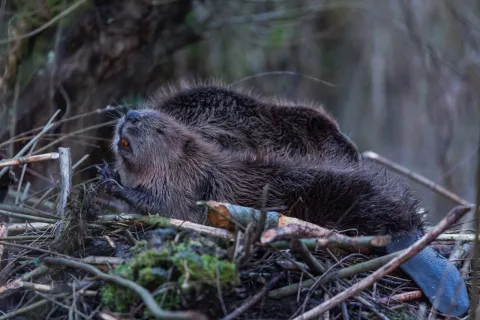
Beavers are semi-aquatic, territorial, herbivorous mammals that live in family units. They are the second-largest rodents in the world, just after the capybara.
© H. Lassner
Page content
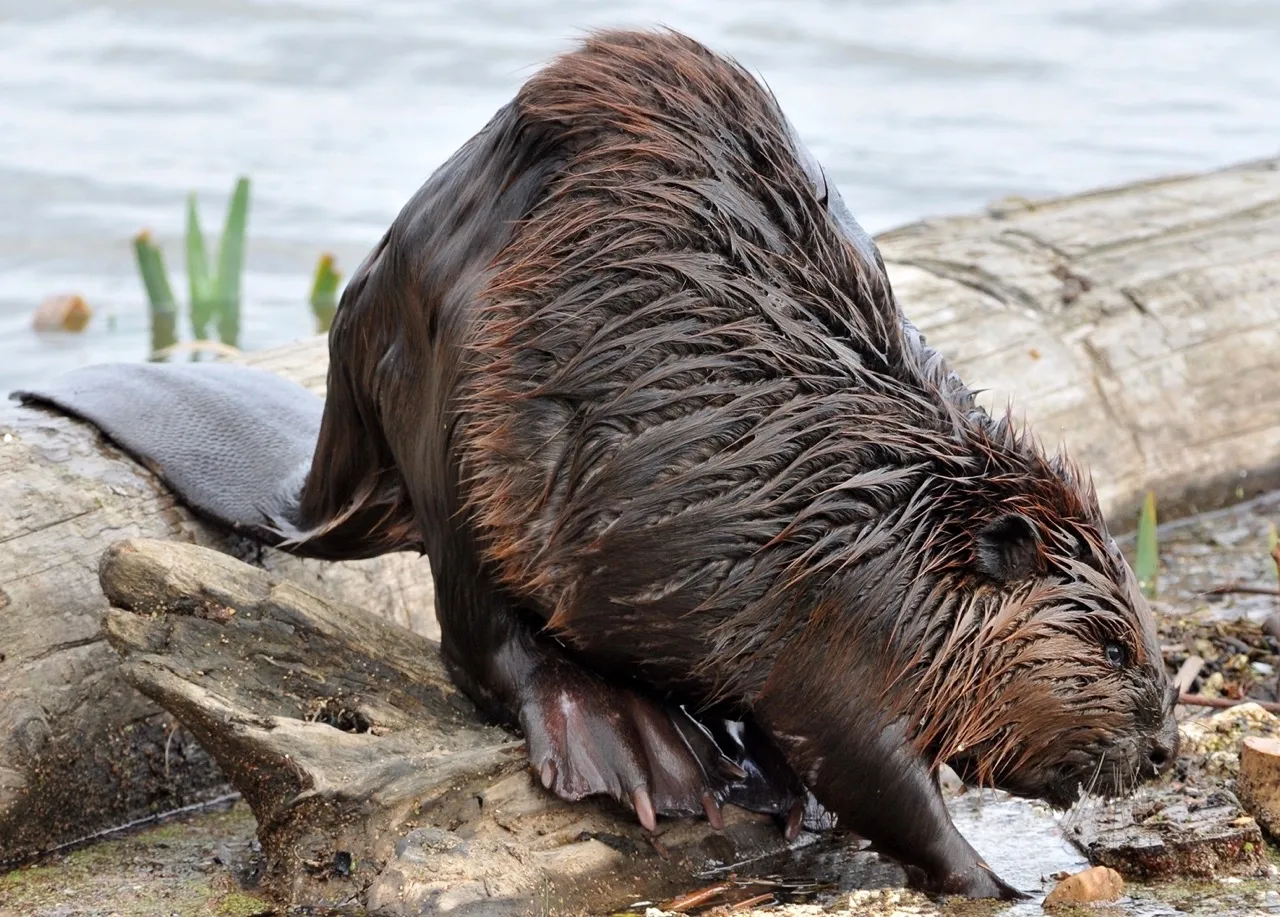
Two species of beaver exist: the North American beaver (Castor canadensis)(Figure 1) and the Eurasian beaver (Castor fiber)(Figure 2). Whilst they look similar, Eurasian beavers tend to have narrower tails, lighter brown fur, and longer, more angular skulls. They also differ genetically and cannot interbreed, as Eurasian beavers have 48 chromosomes compared to the American beaver’s 40.
Historically, Eurasian beavers were widespread across Europe, but centuries of hunting for their fur, meat, and castoreum (a glandular secretion used in perfumes and medicine) drove them to the brink of extinction. By the early 1900s, fewer than 1,200 individuals remained in isolated pockets of Europe. Thanks to conservation efforts, such as habitat protection and reintroduction programs, and legal protection, they’ve made a remarkable recovery.
Beaver biology
Beavers are semi-aquatic mammals and are well-adapted to living on the boundary of water and land. Their physical features (Figure 2) and behaviours allow them to thrive in wetland environments around the world.
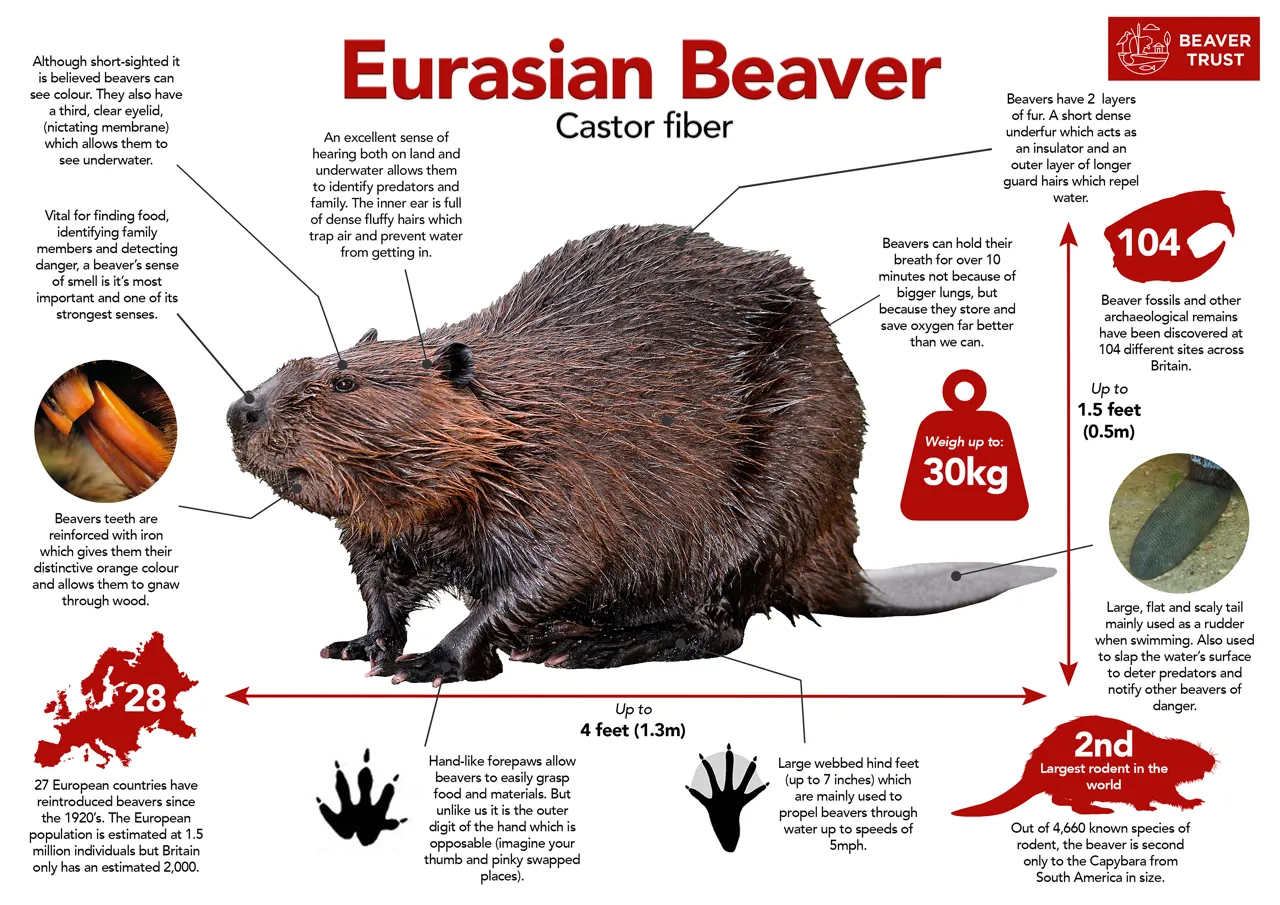
Beavers are agile swimmers and can hold their breath underwater for up to five minutes. They move clumsily on land and prefer to travel through water, which offers both safety and ease of movement. Their clawed front paws are well-suited for digging burrows, channels and constructing lodges or dams.
Diet & foraging behaviour
Beavers are strictly herbivores and will forage within 20 – 30 metres of a watercourse or waterbody. Their diet consists of a wide variety of plants and trees, which changes with the seasons.
Beavers are capable of felling large trees (over 1 metre in diameter) in order to reach young shoots. The larger branches are used as building material for lodges and dams.
- Summer: Aquatic plants, grasses, herbs, and leafy vegetation
- Winter: Bark, twigs, and roots from deciduous trees
- Preferred tree species: soft wood like willow, aspen, poplar
Territories
Beavers are highly territorial animals. They actively patrol their territory to detect intruders or predators and will defend through fighting and warning behaviours, such as boundary stick displays.
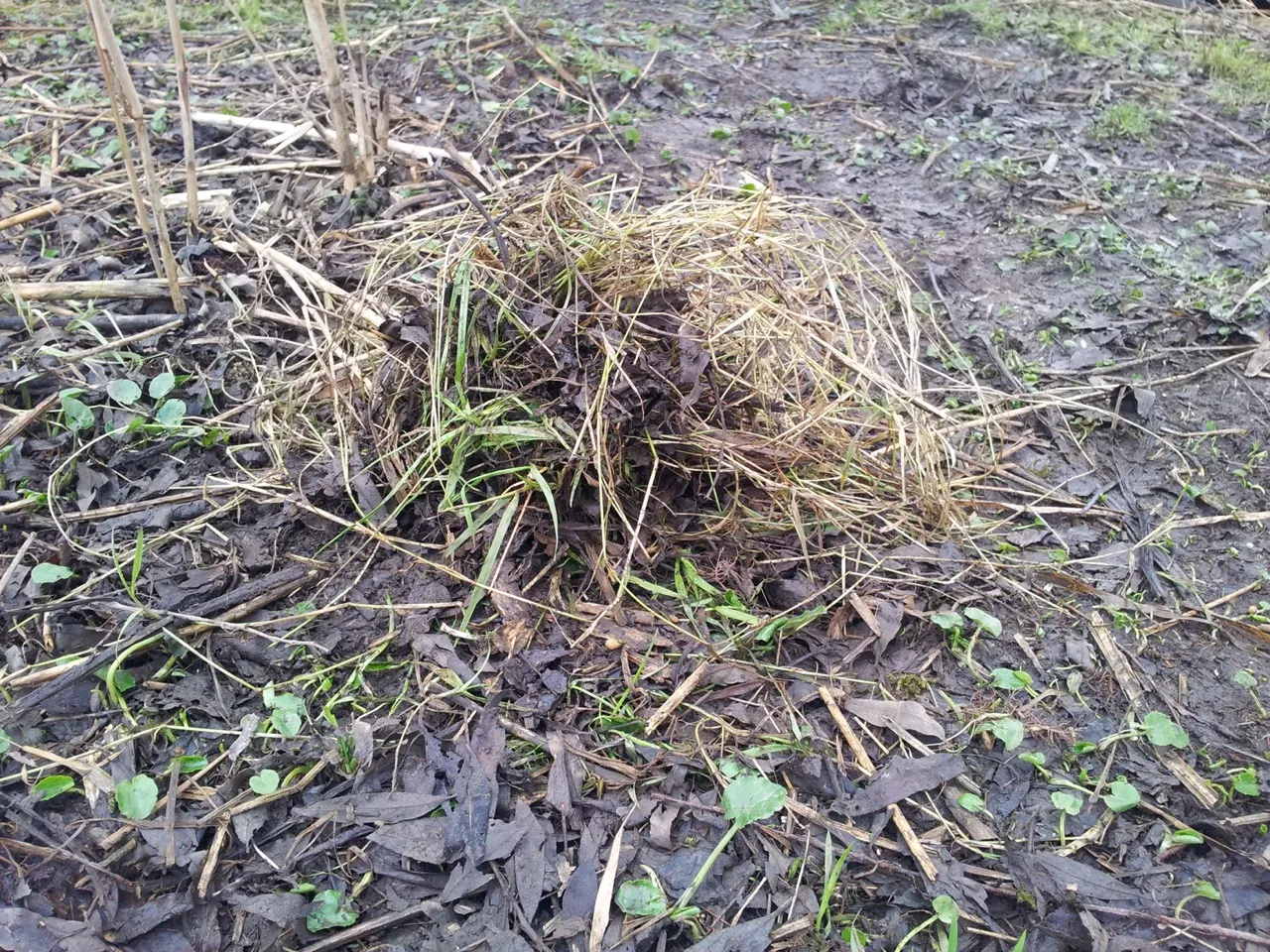
Beavers mark their boundaries using scent mounds made from mud and vegetation (Figure 3). These carry the unmistakable "beaver horn" scent—often described as a mix of shoe polish and antiseptic.
Territories vary in size, from 0.1 to 21.2 km along waterways or waterbodies, with an average size of around 3 km. The size of a territory depends on several factors, such as habitat type, availability of food, and beaver population density. Each territory includes important areas for foraging, overwintering, reproduction, and rest.
Social structure
Beavers are monogamous and live in family units of up to two generations of offspring. They have between 1 and 5 kits with an average of 2 or 3 each year. When the kits are around 2 to 3.5 years old, they disperse to establish territories of their own.
Family profile
- Mating season: Winter (January–March), typically in water.
- Gestation: 3.5 months.
- Birth: Kits are born April–July, fully furred and alert.
- Care: Kits are weaned after 6 weeks, and begin exploring by early summer
- Independence: At 2–3 years, juveniles leave to establish their own territories.