Prevent water level changes
When beavers block a pump inlet or build a dam, water levels can change and have negative impacts. There are several measures that prevent water levels from changing. In order to choose an appropriate measure, it’s necessary to understand the reason for the behaviour of the beaver.
Page content
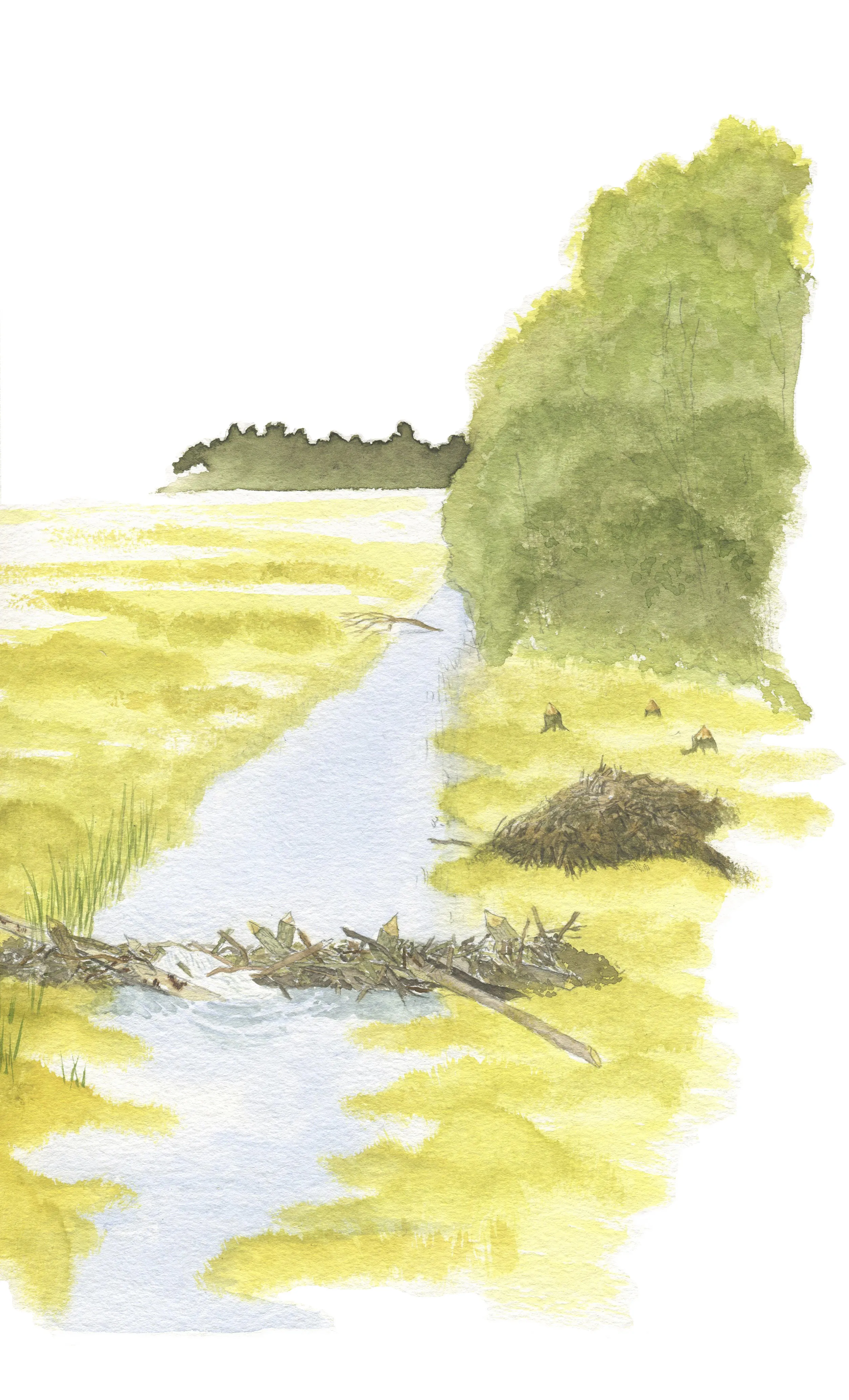
Beavers build dams for various reasons, often affecting water levels near their lodges or burrows. They may also block pumps or culverts to prevent the water level from dropping. Understanding why beavers want to maintain a higher water level is essential to adapt their behaviour:
There are two common reasons for this behavior:
- A higher water level increases the length of the bank and thus the foraging area, without a burrow or lodge present upstream.
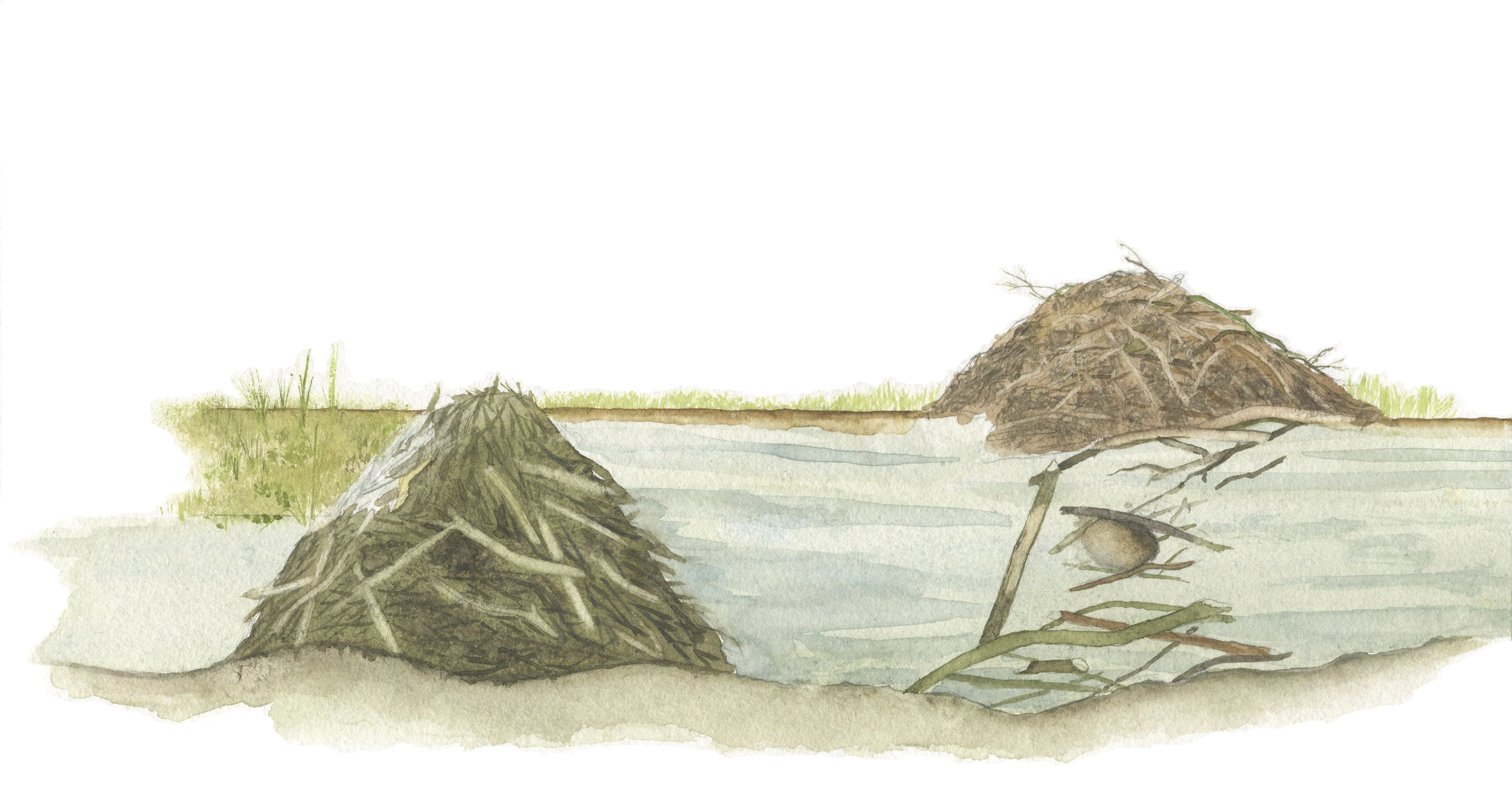
- A lodge or burrow is present upstream. The blockage or dam raises the water level at the entrance(s) improving access and protection (Figures 1 and 2).
Expand the foraging area
When beavers block a pump or build a dam to improve access to food, this behaviour can sometimes be reduced by making the foraging area more accessible. This can be done by lowering part of the riverbank, creating small channels within the foraging zone, or combining both approaches.
For instance, if a dam or blocked culvert provides access to nearby woodland, digging one or more small channels into that area can discourage the beavers from rebuilding the dam or blockage. These channels do not need to be large—depths of 30 to 50 centimetre and a width of around one metre are typically sufficient.
In situations where a dam or blocked culvert helps beavers access a narrow strip of vegetation along a steep bank, simply lowering the bank may have the same effect by reducing the distance beavers must travel from water to food.
Deepening the watercourse
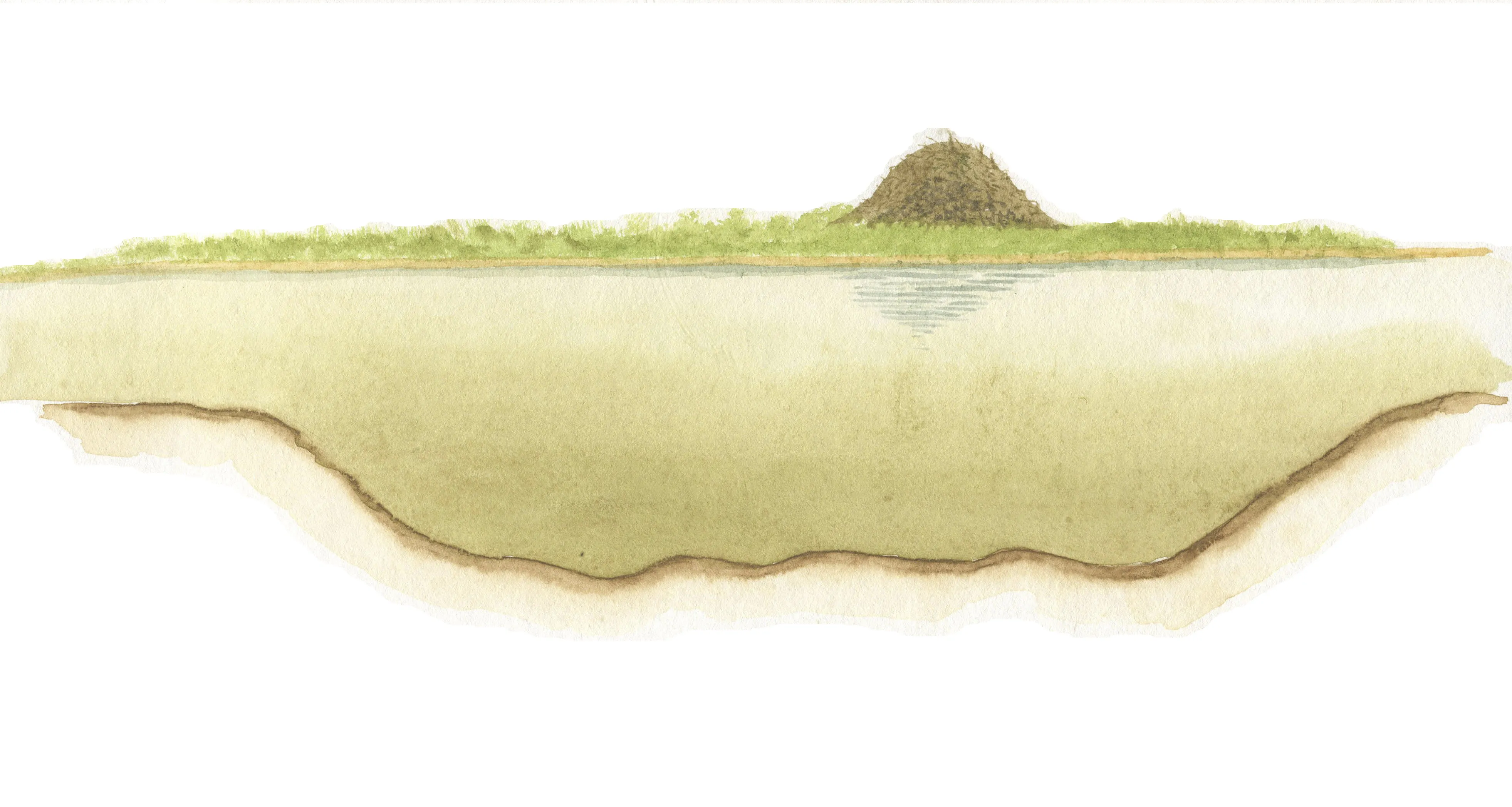
If beavers are affecting water levels due to a lodge or burrow present upstream, deepening the watercourse can be an appropriate measure.
Note: lodges and burrows can be hard to find because their entrances are usually underwater at normal water levels.
Method
- Confirm if a lodge or burrow is present upstream.
- Locate the upstream entrance(s) of the lodge or burrow.
- Remove the dam.
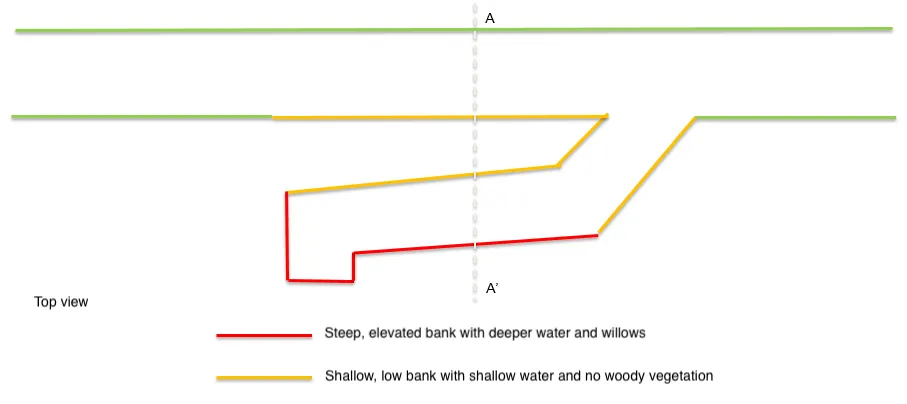
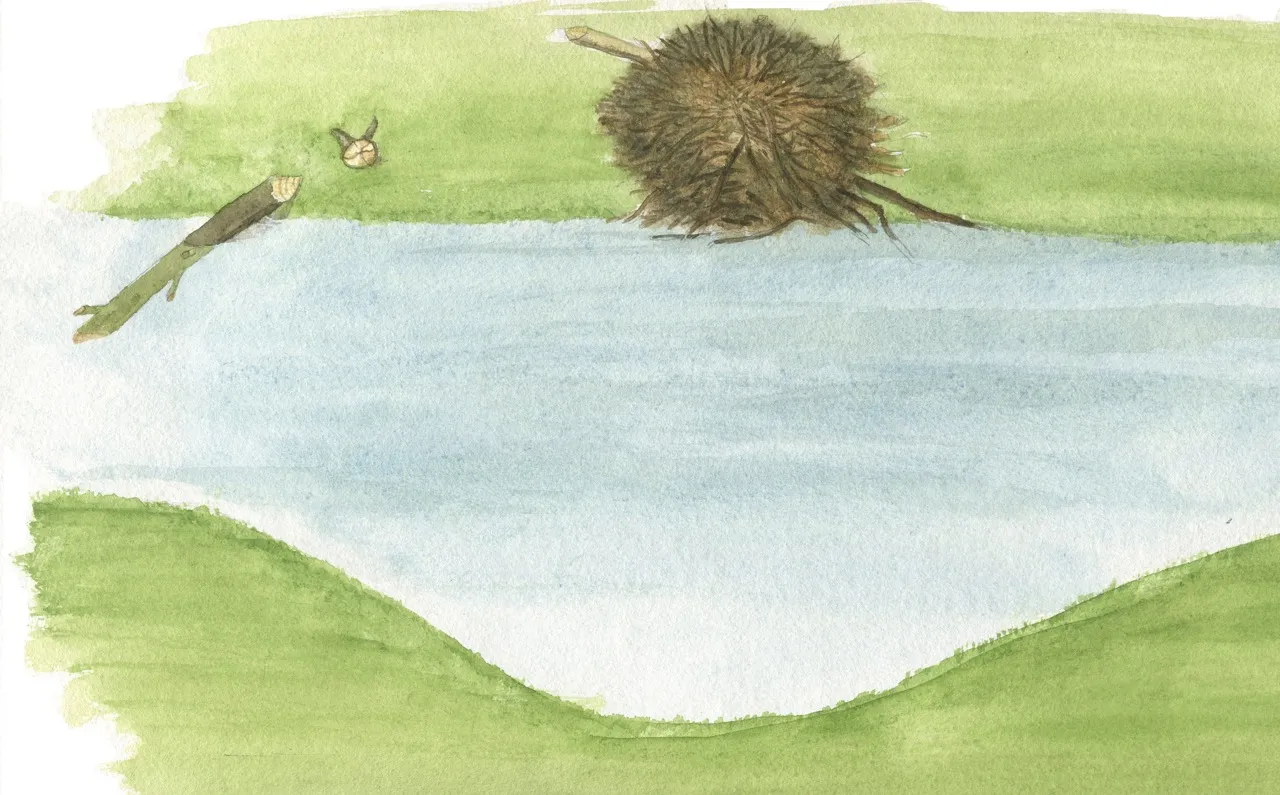
- On the same day, dig a deepening in a zone extending 10 metres up- and downstream from the entrance(s) of the burrow. This deepening should create a water depth of 100 to 150 cm without the need for a dam or blocked pump (Figures 3, 4, and 5).
- If possible, widen the watercourse toward the opposite bank of the lodge or burrow. If there is a maintenance or footpath on that bank, shape the bank with gentle slopes or lower it to prevent undermining by beavers. If space for this is limited, install protective mesh in the bank.
- To reduce sediment buildup, consider creating a small sedimentation trap upstream with sloped banks in an easily accessible location (about 10 meters long).

Side channels as alternative lodge locations
Some streams have side channels or dead-end branches. These features are ideal for creating alternative lodge sites, reducing the need for beavers to build dams or block culverts. Such channels can also be constructed.
Improving side channels as alternative lodge location:
- To prevent siltation of the necessary 1-metre deep excavation, a small upstream sill can be installed.
- The sill height depends on the water level at which the side channel should start flowing during high water.
- Connecting downstream branches slows sedimentation (Figures 6 and 7).