
Gnawing prevention on individual trees
There are several ways to prevent beavers from foraging on shrubs and trees, such as removal of vegetation, anti-gnawing paste, and constructing mesh around trees.
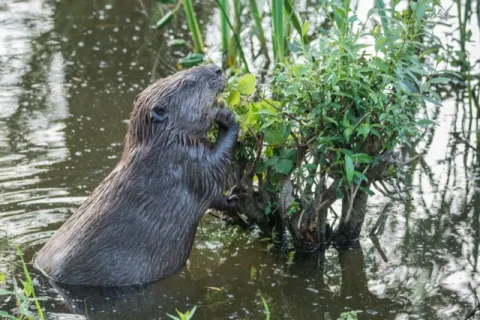
© E. Giesbers
Page content
Removing gnawed trees or vegetation
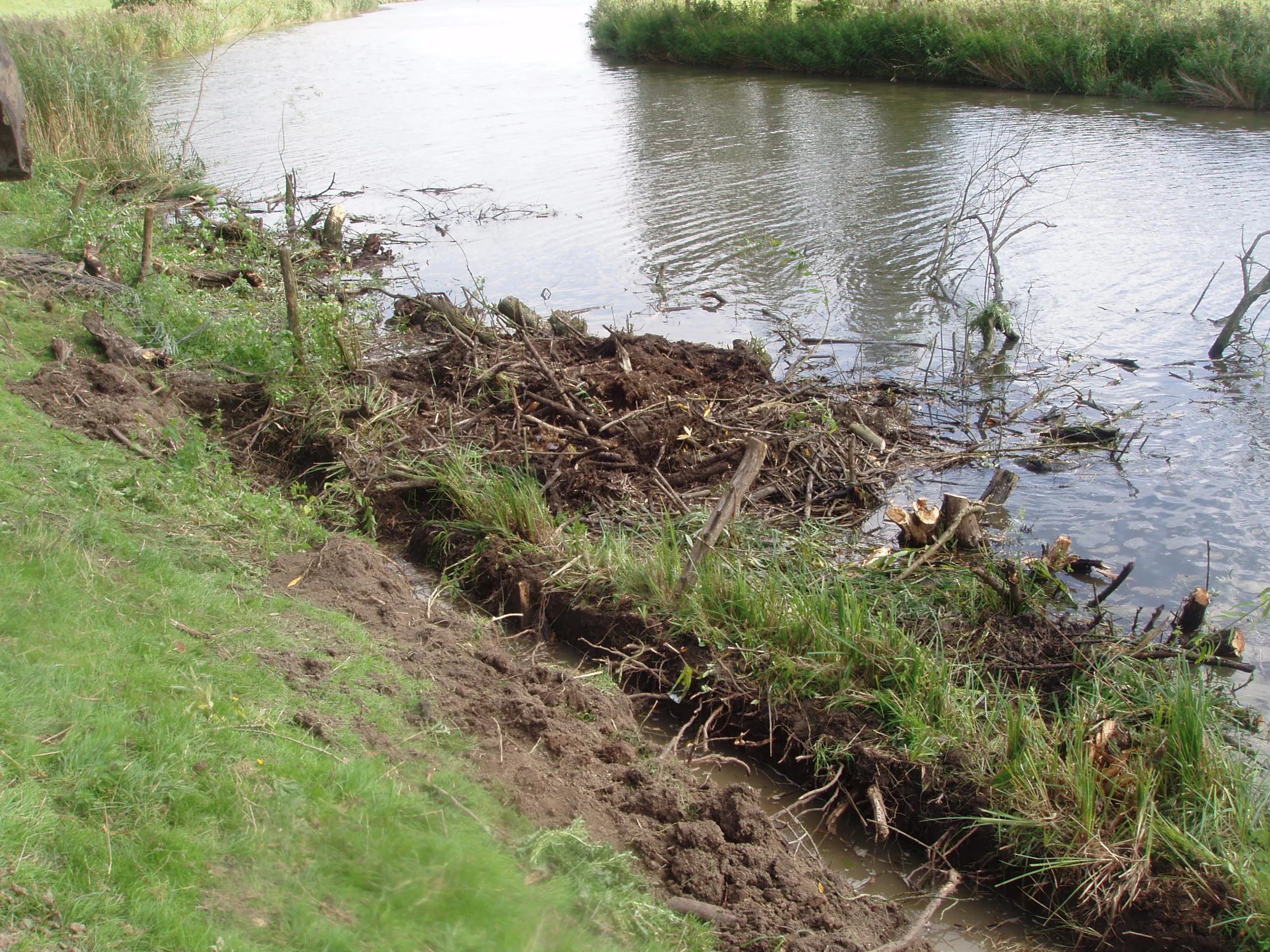
To prevent beavers from foraging along a river bank or if gnawed trees pose a risk of falling, it may be considered to remove them through controlled felling. Removing existing woody vegetation may also reduce the risk of beavers digging in a vulnerable bank (Figure 1).
Permit requirements
Whether a permit is needed depends on local legislation and regulations and the ecological impact of the removal. Especially if beaver territory or foraging area is impacted and/or other plant and animal species are affected. Always check with local authorities before proceeding.
Mitigating factors that may support permit approval or make a permit unnecessary:
- Only a few trees are removed.
Felled trees are left accessible to beavers (e.g., near the shoreline).
Leaving trees in place can help reduce further gnawing. Beavers are more likely to use the felled tree and less likely to target others.
- Vegetation is replaced or compensated elsewhere in the same territory.
Considerations
Removing vegetation cannot completely prevent beavers from digging, as many burrows and several lodges have been found in areas without woody vegetation, although it can reduce the likelihood of burrowing at that location.
These measures are most effective when combined with offering an alternative site that is highly suitable for constructing a burrow or lodge. This further decreases the burrowing pressure on the bank where it is undesirable.
Anti-gnawing paste
Individual trees that have not yet been significantly gnawed can be treated with an anti-gnawing paste, such as Wöbra. This is a non-venomous paste that consists mainly of quartz sand. The growth and sap flow of trees is not affected by this paste and it looks transparent after it has dried.
When choosing and using an anti-gnawing paste, ensure it is non-toxic and does not impede the growth of the trees. Consider the application instructions, the effectiveness of the paste, and the duration before reapplication is needed.
Constructing mesh around trees
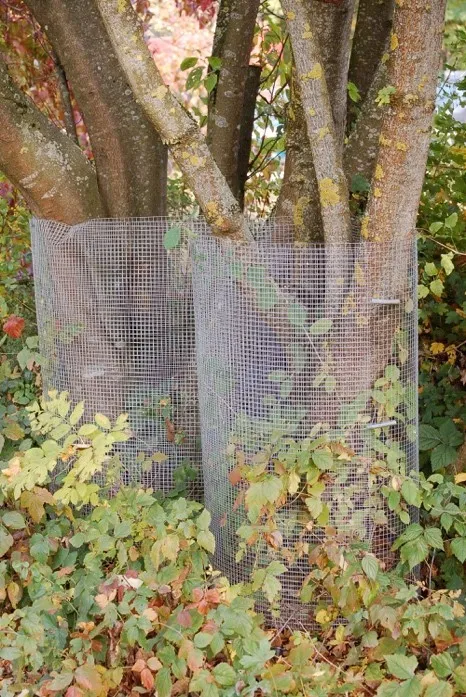
Individual trees that have not yet been significantly gnawed, can be conserved by using anti-gnawing mesh around the trees. Standard chicken wire could provide some protection, but is not always fully effective. If the mesh is too light or not secured enough, beavers could remove it and start gnawing anyway. This is most likely to happen if there are no or insufficient alternative food sources in the area.
More effective alternatives to chicken wire include woven wire (e.g. sheep fencing) or chain-link fencing. To prevent beavers from removing or pushing up the mesh, it is recommended to firmly secure it with ground pins.
Specifications:
- Minimum mesh size: 2.5 x 5 cm
- Minimum wire thickness: 2 mm (to resist gnawing)
- Recommended height: up to 1 metre
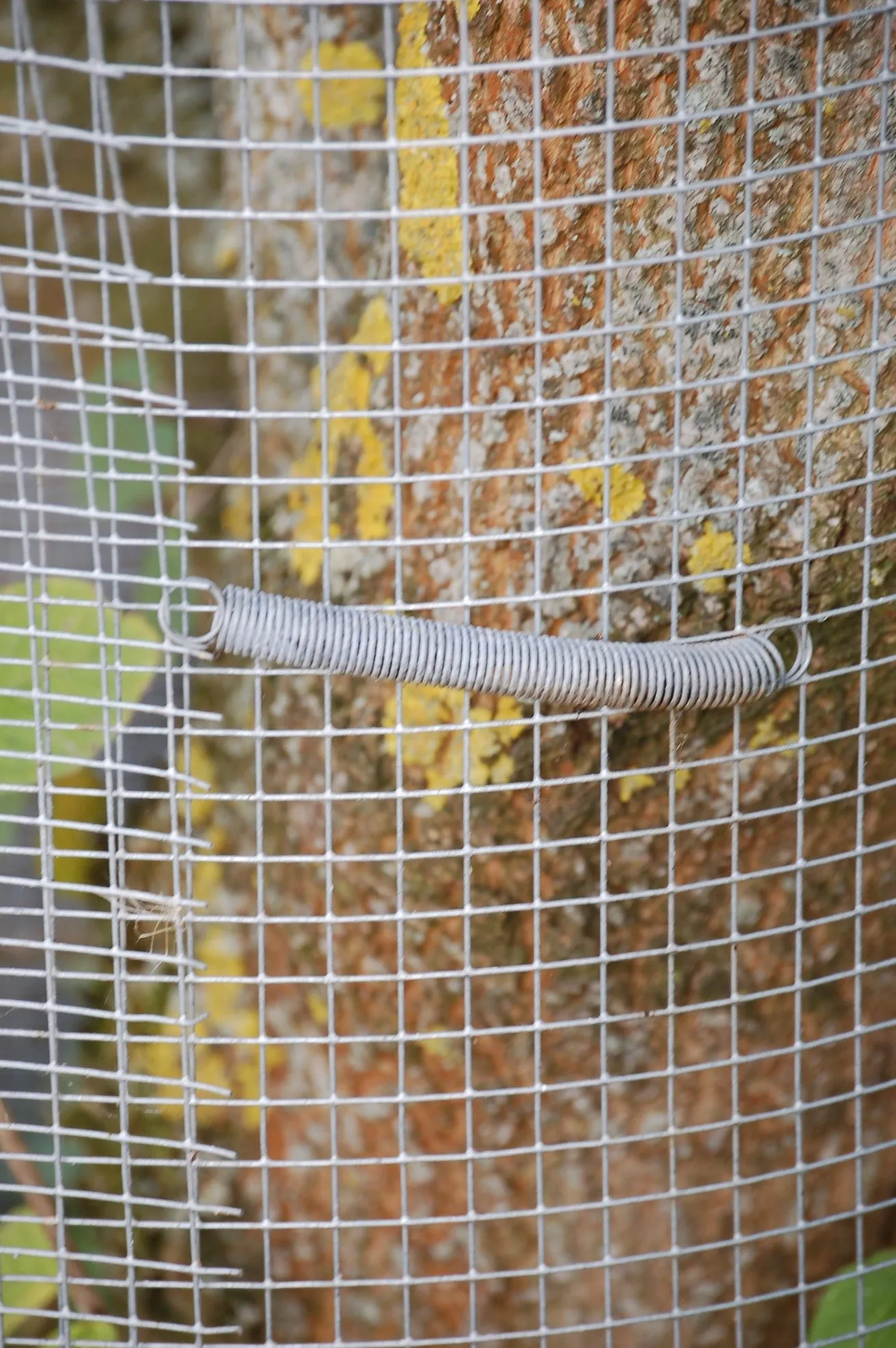
When constructing mesh around trees it is possible to provide room for potential radial growth of the trees by using a metal tension spring. The mesh should then be checked every few years to make sure it still functions properly.
Providing other tree species
To prevent beavers from gnawing on particular trees and shrubs in a certain area, placing attractive tree species - such as willow and poplar - in other adjacent areas can help to reduce the foraging pressure on particular trees.