
Excavation and filling beaver burrows or lodges
If beavers have burrowed in an unwanted location, their burrow could be excavated and filled to reduce or prevent negative impacts. The timing of this intervention is important and a permit may be required. When implementing this measure, consider creating an alternative lodge location.
Alternative lodge location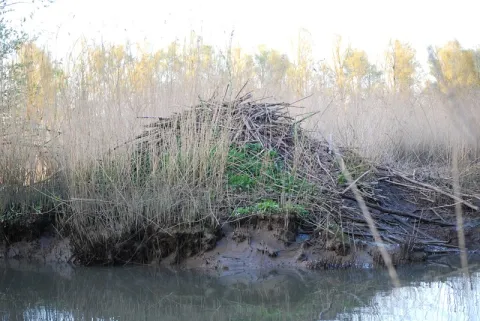
© M. van den Hoogenhoff
Page content
If a burrow or lodge is located in an undesirable location, it can be excavated and filled. The timing of this intervention is important. Between May and August, beaver kits may be present. In that case, wait until September before proceeding. Exception to this is when a calamity, such as a dike breach or road collapse, is imminent and immediate action is required. In that scenario, involve a beaver expert immediately. The expert may be able to encourage voluntary relocation of the beaver by creating a mild disturbance.
Permit Requirement
Depending on jurisdiction, permits or licenses may be required before modifying, removing, or interfering with beaver structures. These rules can vary widely across countries, and in emergency situations some areas allow after-the-fact applications. It’s strongly advised to consult local authorities to confirm rules and regulations. Find more information on legislation here.
Method
- Identify entrances
Determine how many entrances the burrow or lodge has. - Block entrances
Block each entrance with branches approximately 5 cm in diameter, placed tightly enough that a beaver cannot pass through without gnawing them. Use debarked branches to avoid attracting beavers as a food source. - Monitor activity
Check each morning whether any branches have been gnawed. Replace any that were. Continue until the branches remain untouched for three consecutive days. - Excavation
On the third undisturbed day, the burrow or lodge can be excavated. Do so in a way that allows any remaining beavers to escape safely (Figure 1). Use shovels or an excavator for sandy banks. For clay banks use an excavator. Avoid positioning the excavator directly over the burrow or lodge.
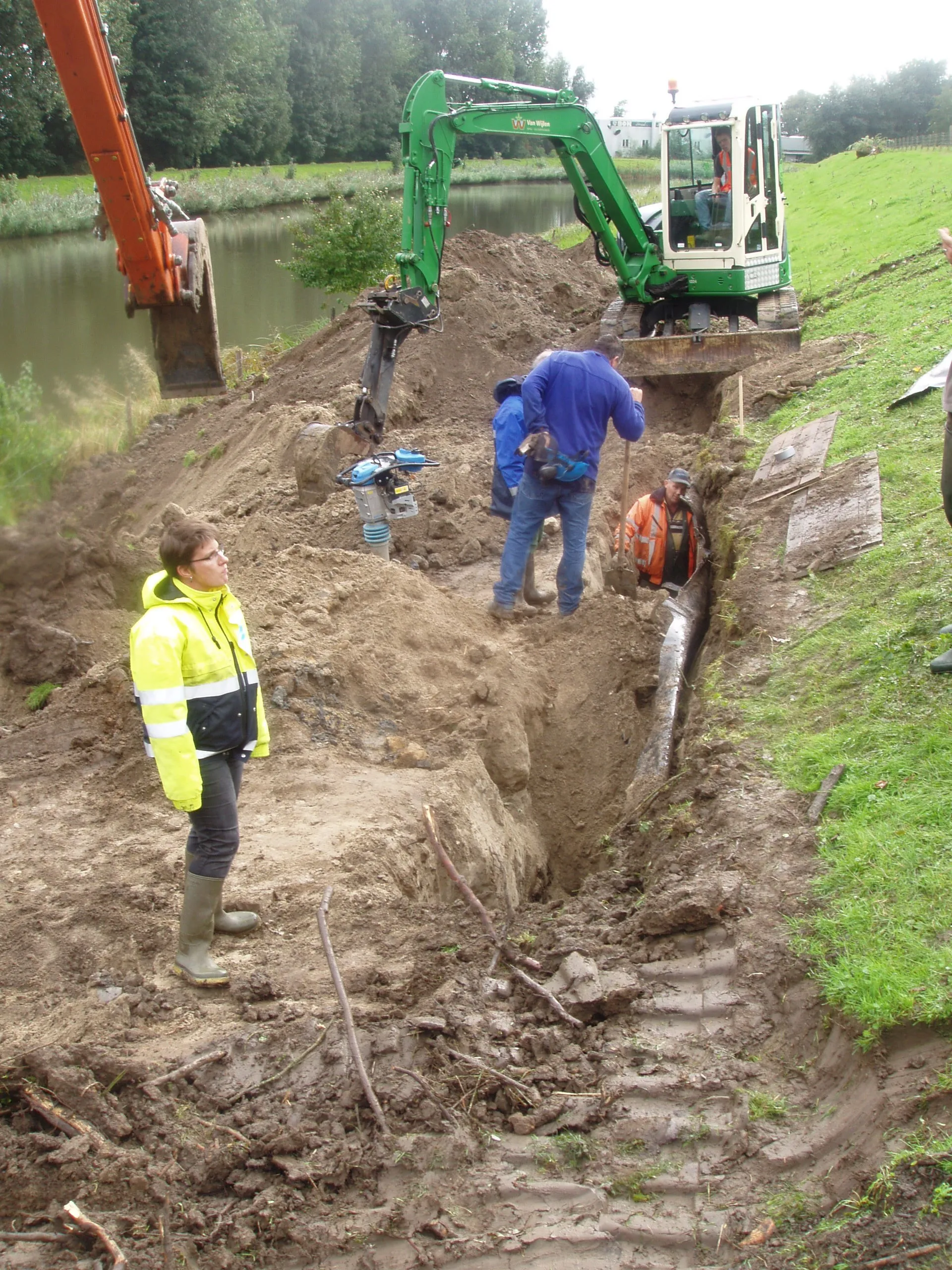
Specific excavating method by structure type
Burrow
Excavate the tunnel from the water’s edge into the bank (Figure 1). Use an excavator at low speed so any beaver present can escape unharmed.
Lodge
Manually create an opening in the lodge to scare out any remaining beavers. Use a flashlight to double check. Once all beavers appear to have left, use an excavator to remove the lodge material and dig out the tunnel toward the water - again at low speed to avoid injuring any remaining beavers.
After excavation, refill the area. If complete excavation or refilling is not necessary, partial filling with swelling clay (such as bentonite or dämmer) may be sufficient.
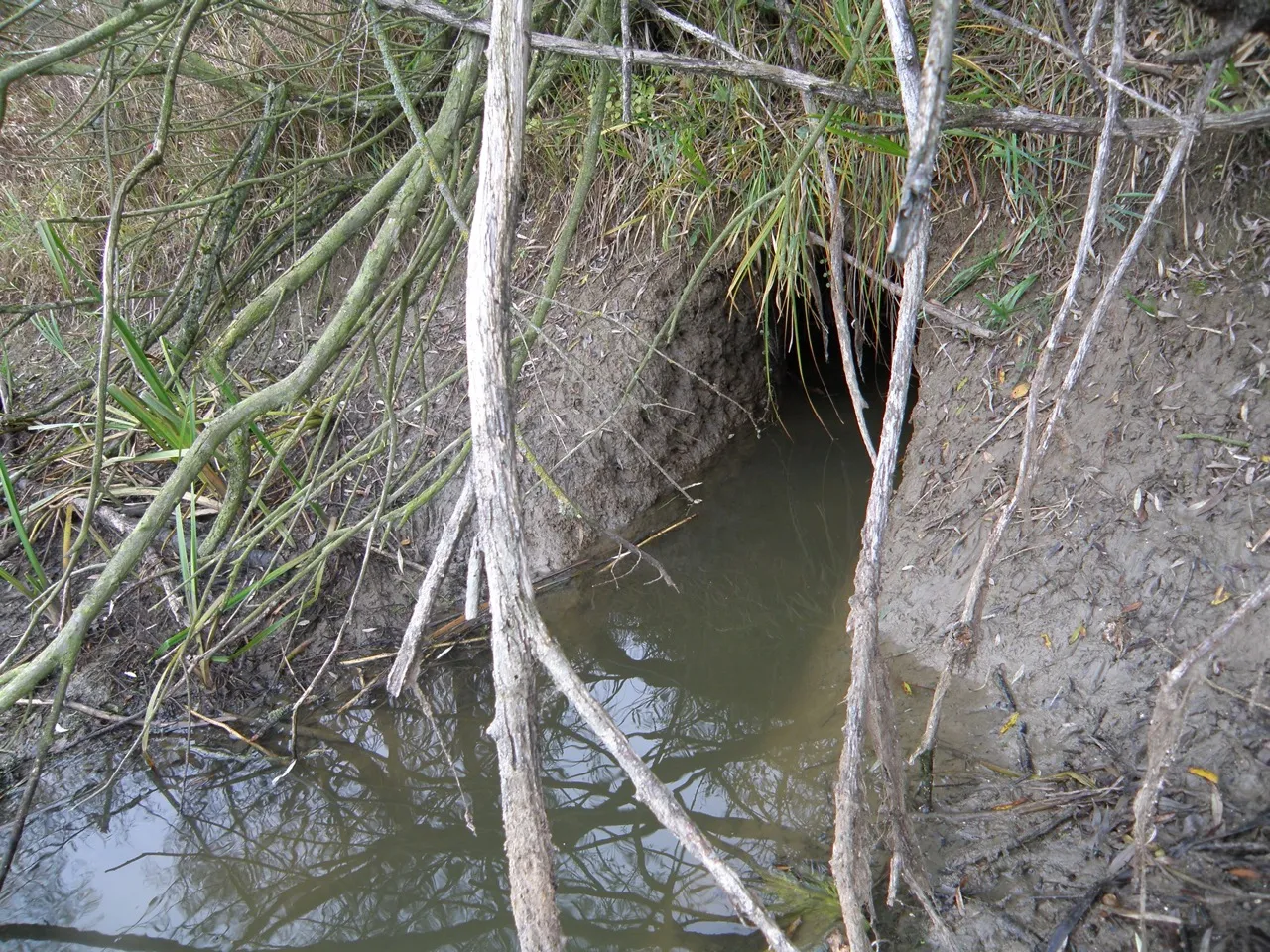
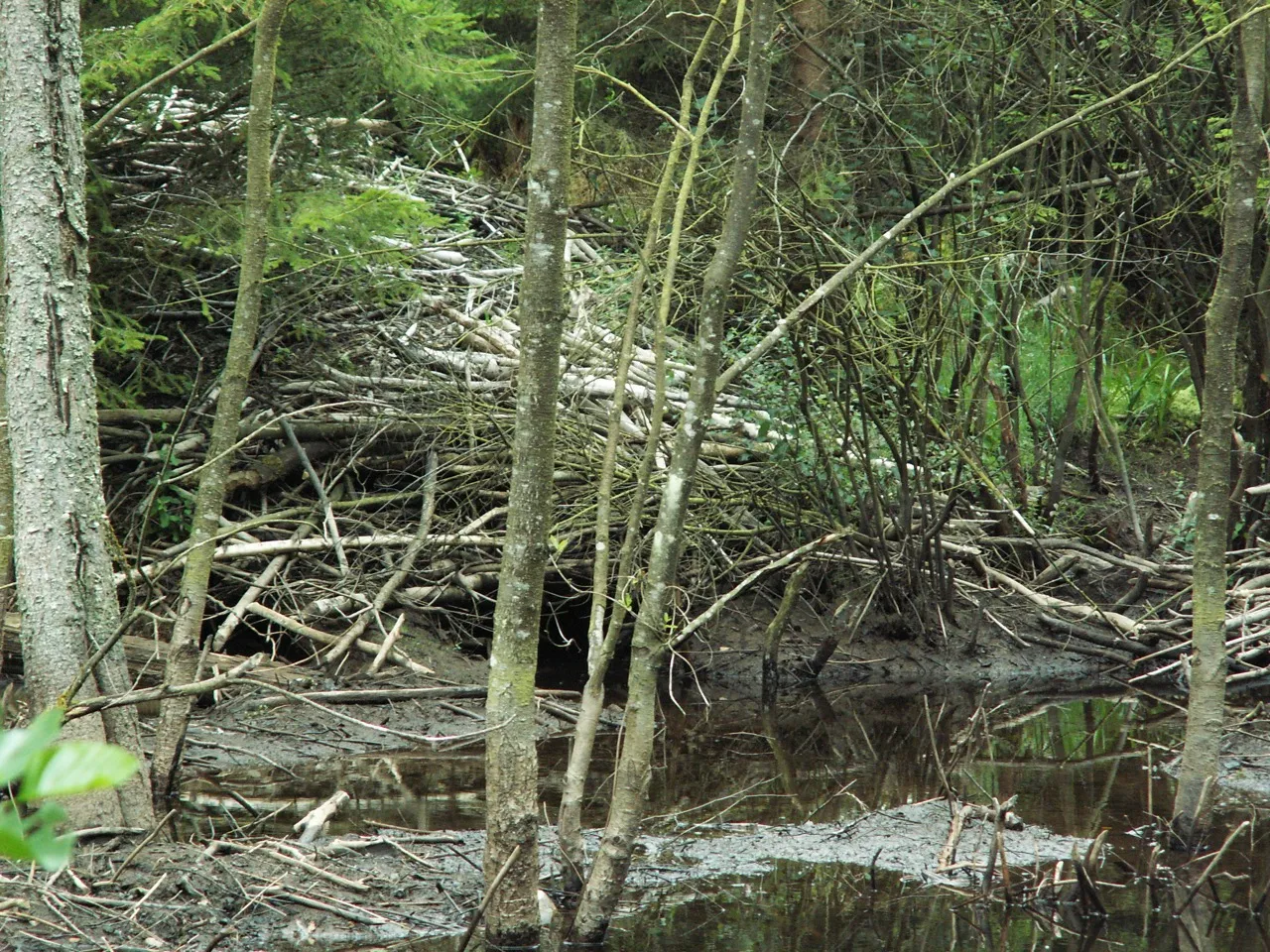
If a beaver is present
If a beaver is still present in the burrow or lodge, stop using the excavator and allow the animal to leave. If it doesn’t leave on its own, try gently encouraging it with sticks. If this fails, carefully proceed with manual digging in sandy soils or excavating in clay soils while repeating the prior steps.
Do not stomp the excavator bucket on the burrow roof to scare the beaver, as this may cause the roof to collapse and entrap the animal.
Monitoring vulnerable locations nearby
Keep in mind that beavers may return to build a new burrow or lodge—either at the same site or nearby. It is therefore advisable to map the beaver territory and to identify vulnerable locations for monitoring or modification. Consider habitat adjustments to make other areas more suitable, reducing the likelihood that beavers return to a problematic site.