
Dam lowering
Lowering a dam can be an easy way to mitigate water level changes due to damming. Seasonal variations in dam height should be considered when implementing this measure.
Page content
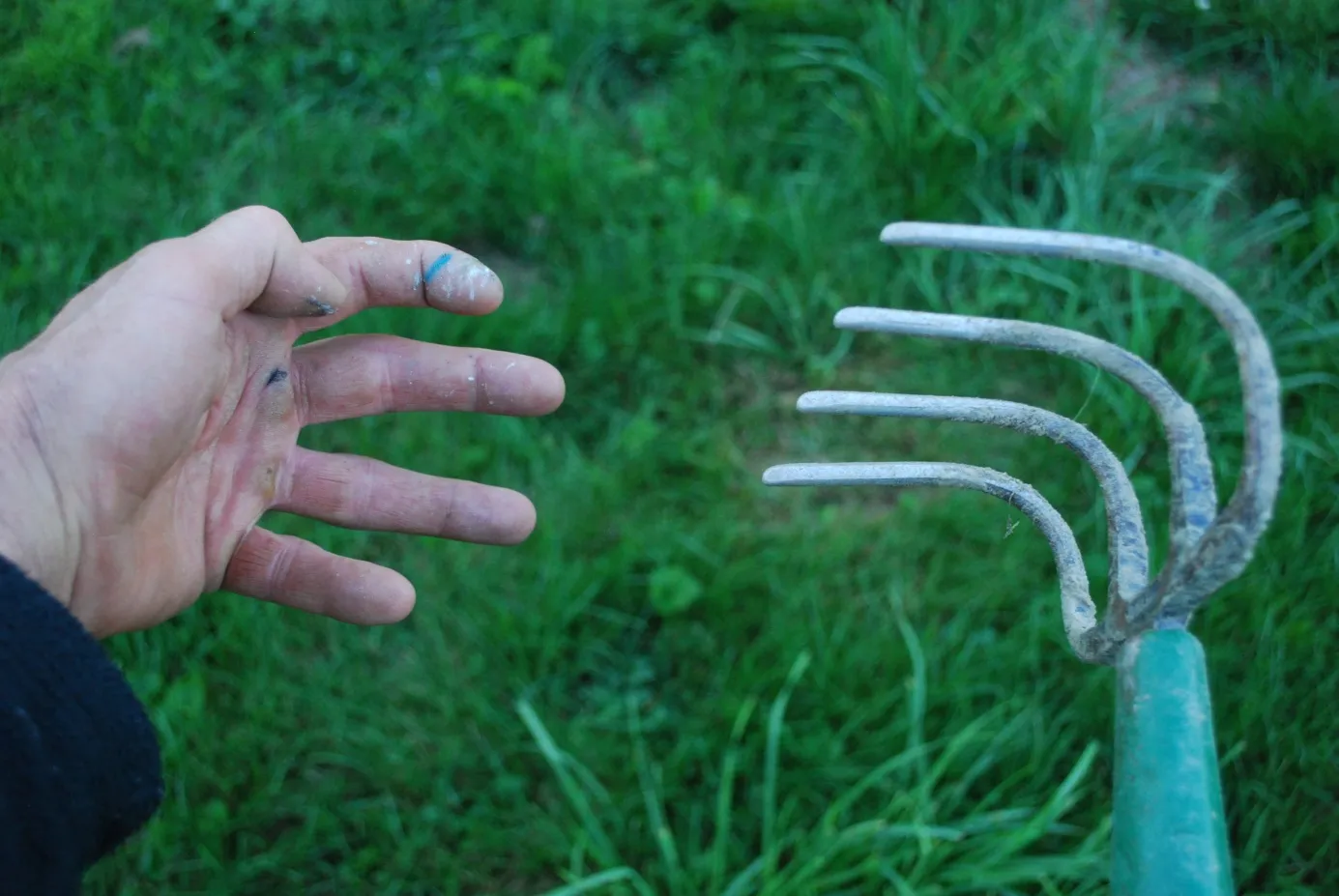
In some cases, the issues caused by a beaver dam can be addressed by lowering the dam to a more acceptable height. If this requires reducing the dam by more than 10 to 15 cm, it is often best to do so in stages. This can be done using a rake (Figure 1) or a small excavator. Using an excavator carries a higher risk of damaging the structural integrity of the dam, which may cause it to wash out more quickly during periods of high water flow.
Beavers may raise their dams in winter, when relatively high water levels are important. This occurs in the Netherlands as a response to unnatural water level regime, where water levels are kept artificially low in winter.
If a higher water level is acceptable in winter but not in summer, the dam can be lowered in spring. In some cases this intervention can be combined with the installation of an electric wire (or “hot wire”), above or in front of the dam. However, beavers are often able to find a way around this measure. If the dam is rebuilt and raised again during winter, its new height can be reevaluated and partially lowered if necessary.