Barrier fencing for culverts
Blocked culverts can cause water damage due to raised water levels. Barrier fencing around culverts can prevent beavers from blocking culverts. However, it’s important to consider road crossing risk if the fencing restricts beaver access to parts of their territory.
© S. Lisle
Page content
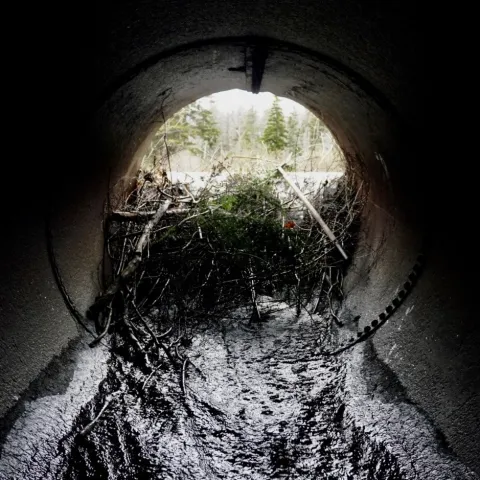
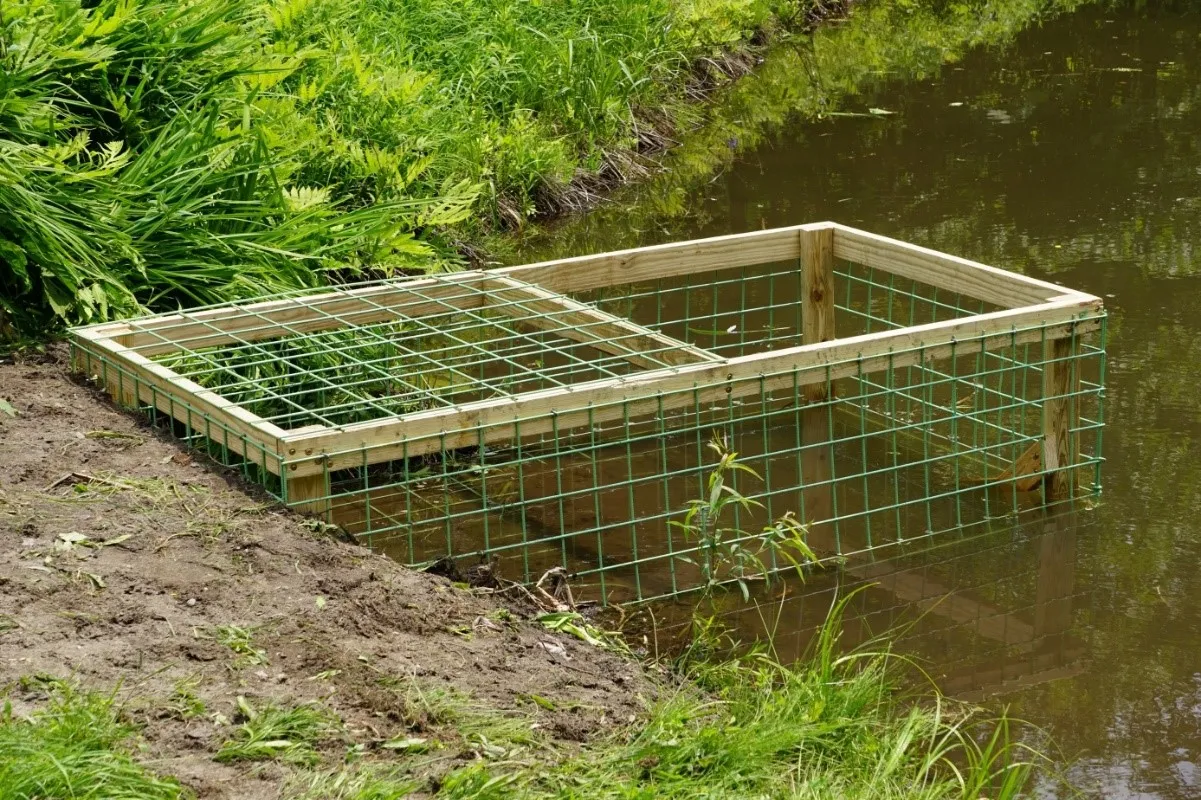
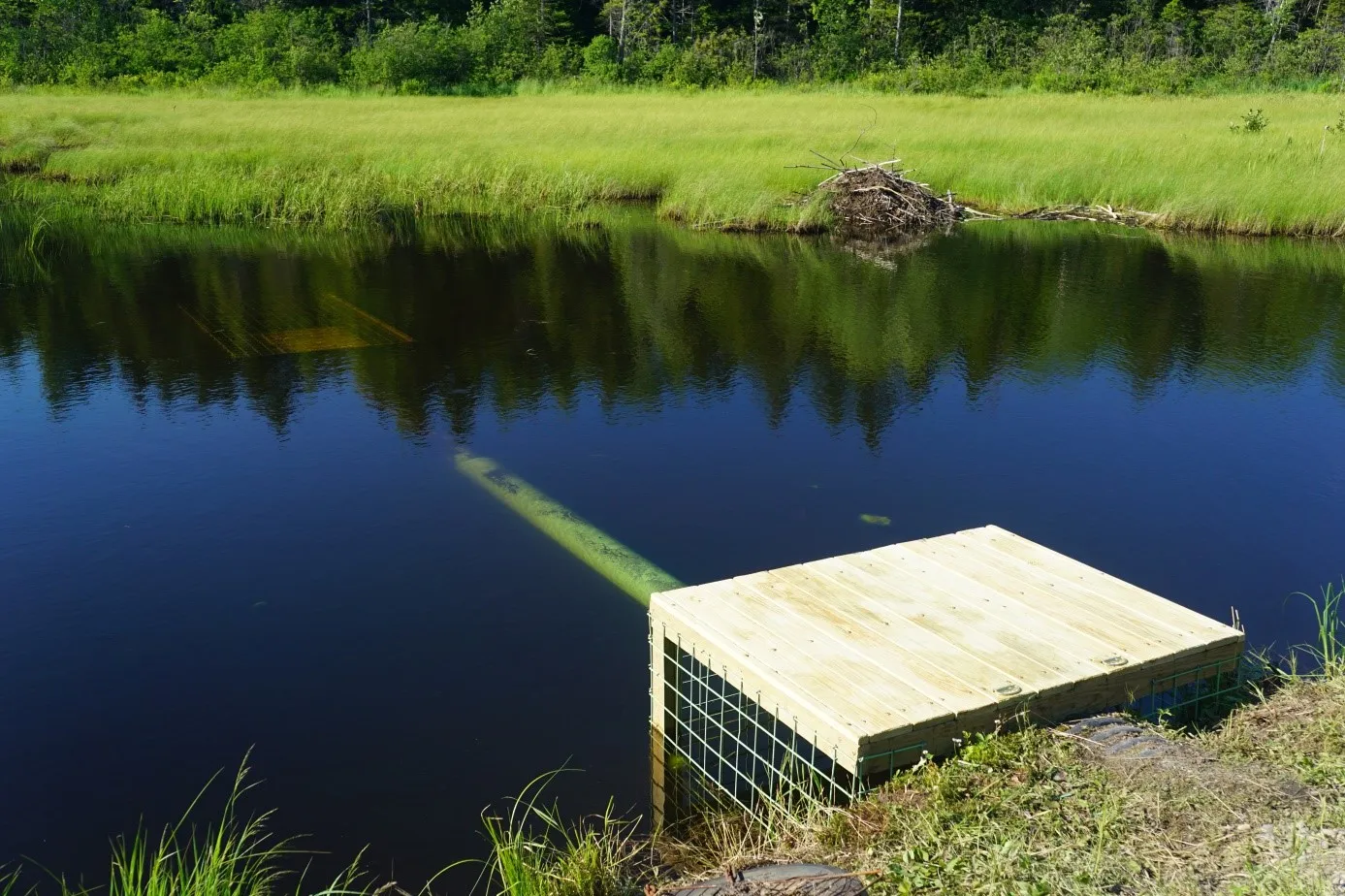
Beavers sometimes block culverts with branches and mud to raise the water level to their preferred height (Figure above). To prevent this, a cage made of heavy-duty mesh (e.g. concrete reinforcement mesh) can be installed in front of the culvert (Figure 1).
Recommended specifications
- Mesh size: 15 x 15 cm
- Material thickness: approx. 5 mm
This is usually sufficient to keep beavers from plugging the culvert. For good maintenance of this barrier fence, built-up debris should occasionally be cleared.
Installation guidelines
- Place wooden posts in a square layout in front of the culvert, adapting the shape to fit the waterway.
- Attach the mesh to the outside of the wooden posts.
- Ensure the mesh extends from the bottom of the waterway to at least 50 cm above the water level.
- Account for higher summer water levels when determining the height.
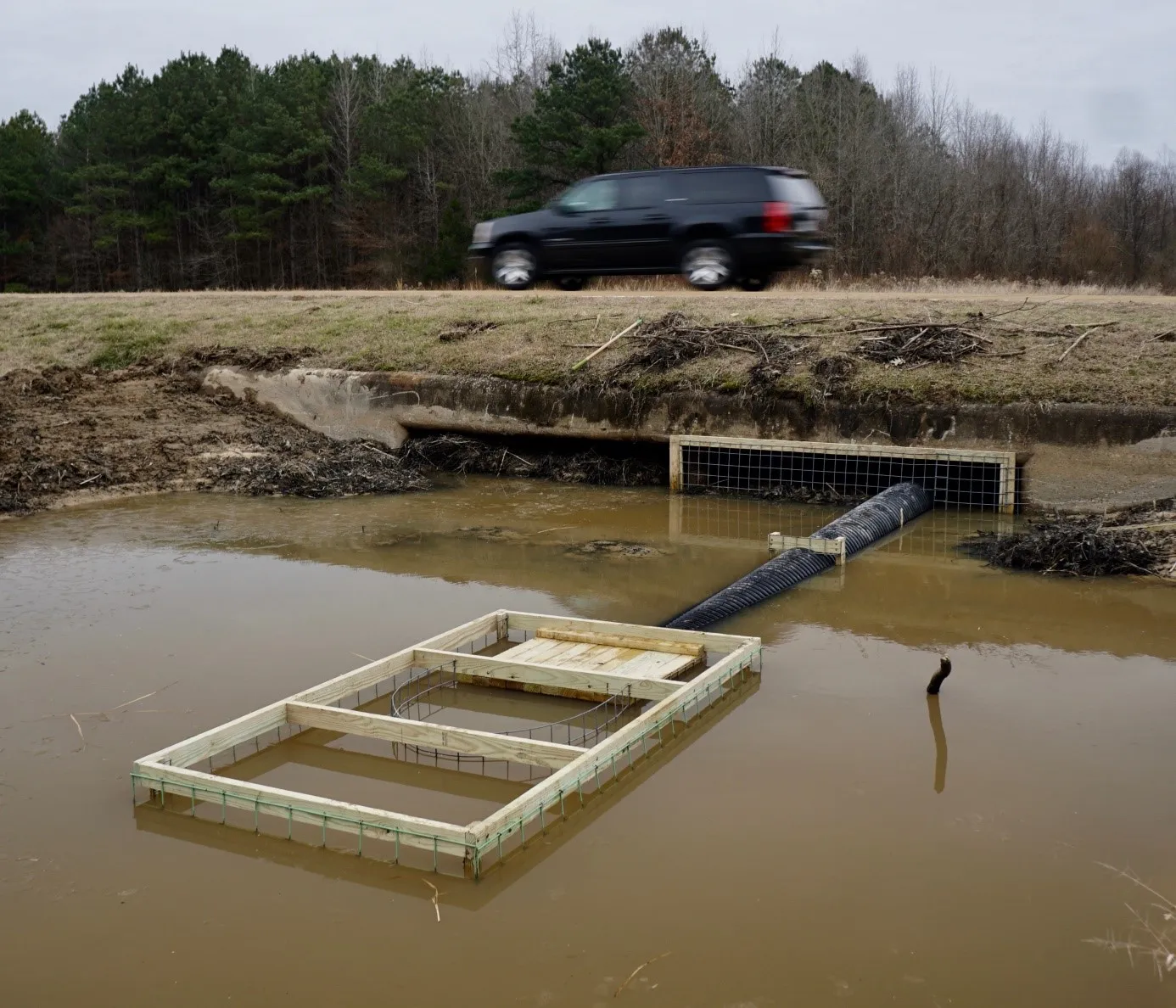
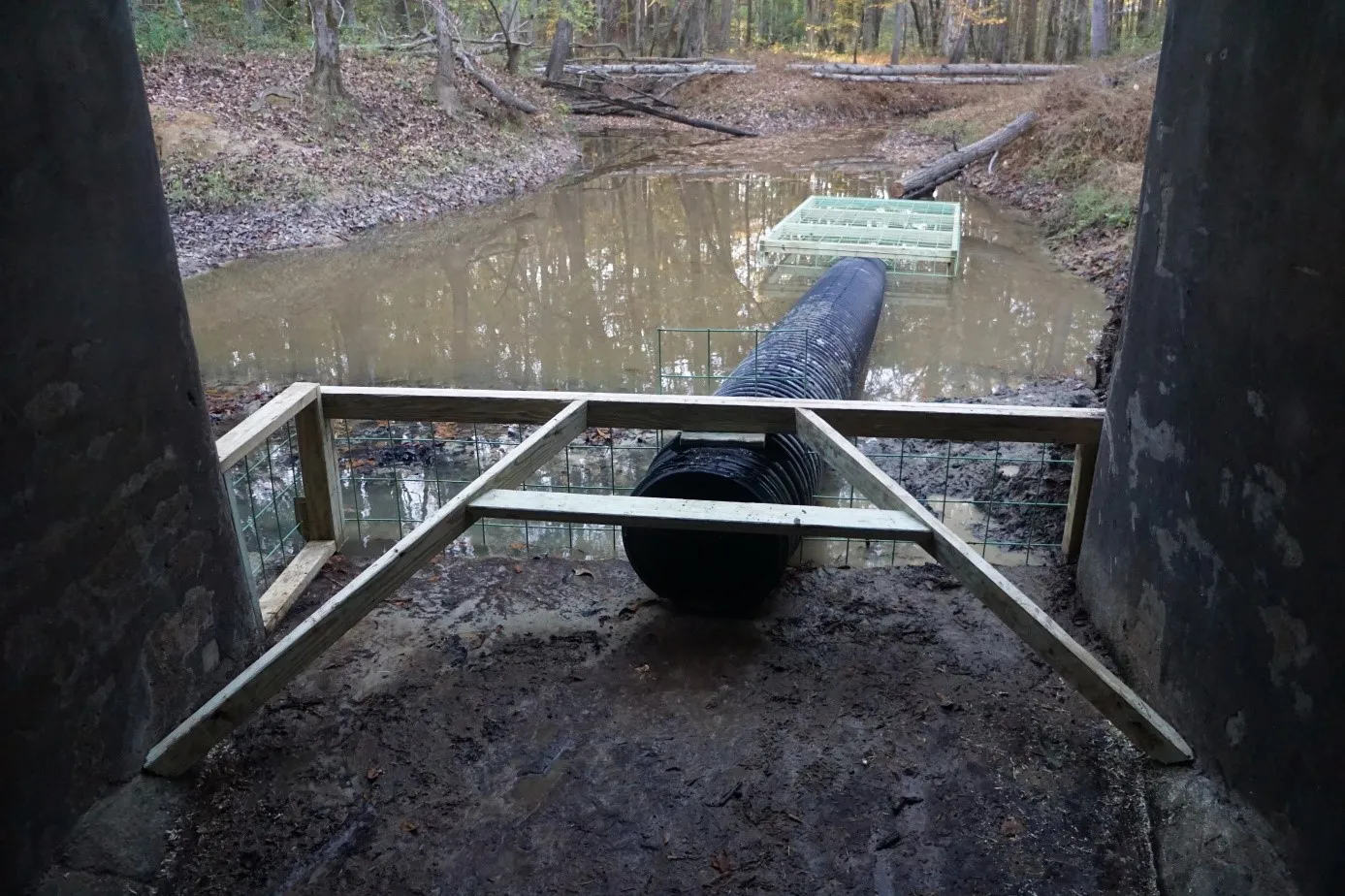
If beavers continue to block the culvert despite the fence, consider extending the culvert with a pipe and adding a second fence around the pipe’s intake (Figures 2, 3, and 4).
Road crossing risk
In some cases, beavers block a culvert but still pass through to access another part of their territory (Figure 3). If the culvert is fully closed off with fencing, beavers might try to cross the road instead. This increases the risk of roadkill. In such cases, a custom solution is required, for which it’s best to consult an expert.